
By Jamie Borowitz, Founder of Smashy Burger House
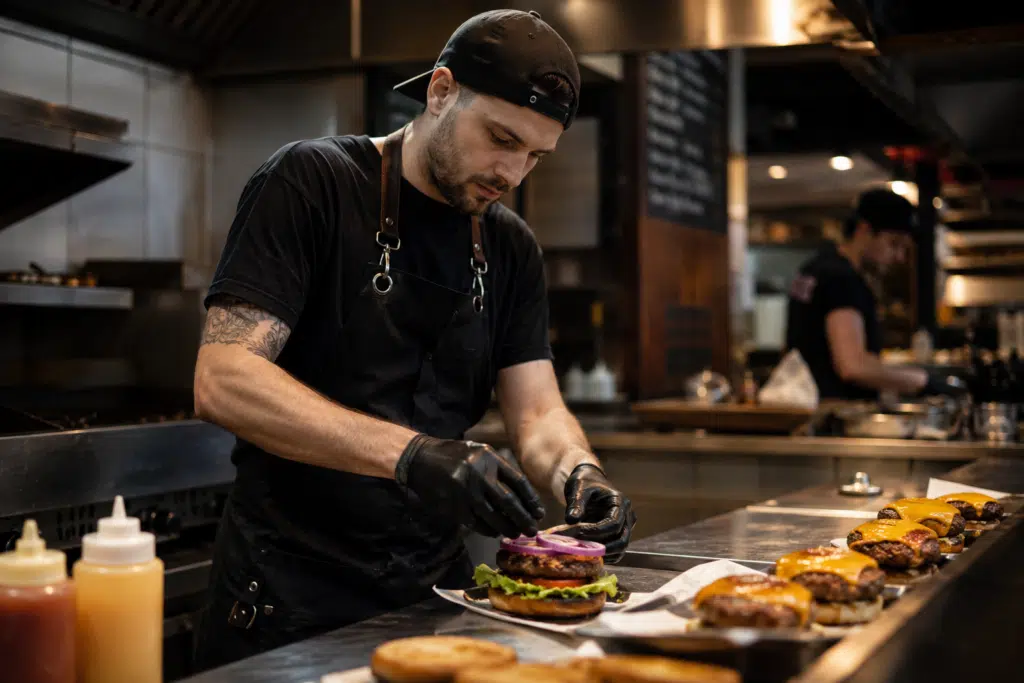
My name is Jamie Borowitz, and I'm the founder of Smashy Burger House, a small gourmet burger restaurant in Austin, Texas. We've been serving handcrafted burgers for years, and like most independent restaurant owners, I wear more hats than I can count. On any given day, I'm managing inventory, helping the kitchen during busy lunch hours, greeting regular customers, handling staff issues, and making sure every burger leaving the kitchen meets the standards we built our reputation on.
One thing I never imagined spending so much time thinking about was hot to increase Google reviews.
Yet, over the past few years, I've realized they influence almost every part of a local business. People don't just search for "best burger near me" anymore—they compare ratings, read reviews, browse customer photos, and often make their decision before they ever step inside your restaurant. In many cases, your Google Business Profile becomes your first impression. The frustrating part was that we already had happy customers.
Every day people told us our burgers were incredible. They complimented our staff, thanked the kitchen, and promised they'd leave us a review. I can't count how many times I heard someone smile and say, "I'll leave you a Google review tonight." They meant it.
But very few actually did. Eventually I stopped asking myself, "Why don't customers leave reviews?" Instead, I started asking a different question. What if the problem wasn't the customers? What if the problem was our process? That simple question led me to run an experiment that completely changed the way we collect reviews.
Why I Decided to Test Different Review Request Methods
Like many restaurant owners, we didn't have a formal review strategy. Sometimes a cashier mentioned Google reviews while handing over the receipt. Sometimes a server reminded customers as they were leaving. Occasionally we'd send an email after a catering order.
There wasn't much consistency.
Everyone online seemed to have an opinion about the best way to get more Google reviews. Some marketing blogs recommended email campaigns. Others insisted SMS messages had the highest conversion rates. A few suggested printing QR codes on receipts or table tents. Instead of believing every article I read, I decided to test the ideas myself.
Over the following month, we asked approximately 500 customers to leave a Google review using five different methods. Every customer had enjoyed the same food and received the same level of service. The only thing that changed was how we asked. I wasn't trying to prove one method was better than another. I simply wanted to know what actually worked in the real world.
Method 1: Email Review Requests
Email seemed like the obvious place to start. After each visit, customers received a polite thank-you email with a direct link to our Google Business Profile. The email looked professional, the subject line was friendly, and the message was short enough that almost anyone could read it in less than a minute.
On paper, everything looked perfect. Reality was different. Many customers never opened the email at all. Others opened it hours later while sitting at work or scrolling through dozens of unread messages. Even customers who clicked the review link often became distracted before finishing the process. The biggest problem wasn't the email itself. It was the delay. By the time customers received our message, the excitement of their dining experience had already faded into the background.
Method 2: SMS Messages
Our second experiment involved text messages. SMS performed noticeably better than email because nearly everyone reads their text messages. Open rates weren't the issue anymore. Completion rates still were. Customers often opened the message immediately, glanced at the review link, and thought, "I'll do that in a few minutes." Those few minutes rarely happened. Life has a way of interrupting even the best intentions. Kids needed picking up. Meetings started. Phones rang. Someone sent another message. Once our restaurant was no longer the center of their attention, leaving a Google review simply stopped feeling important.
Method 3: Printed Receipts
Since every customer received a receipt anyway, we printed a review invitation at the bottom with a QR code and a short message thanking them for dining with us. It cost almost nothing to implemnt. Unfortunately, it produced almost nothing in return.
Most receipts were folded into pockets or thrown away before anyone even noticed the review request. Others disappeared into handbags or wallets, never to be seen again. The review invitation existed. It just wasn't reaching customers at the right moment.
Method 4: Business Cards
Next, we handed customers small review cards that included a QR code and a short message asking them to support our restaurant by leaving a review. People smiled and many thanked us. Almost everyone accepted the card. Very few actually scanned it. Again, the issue wasn't willingness, it was timing. Every extra step between a happy customer and the review dramatically reduced the likelihood that the review would ever happen.
Method 5: Mobile QR Codes
The fifth experiment wasn't particularly complicated. In fact, it was probably the simplest idea we tested. Instead of asking customers after they had already left the restaurant, we asked them before they walked out the door. Our team simply displayed a QR code on a mobile phone while chatting with customers at the counter. That's it, no emails, no reminders, no business cards, no waiting until later. Customers simply scanned the QR code with the phone they were already holding in their hand.
The review page opened instantly. Many submitted their Google review before they even reached the parking lot. The improvement wasn't small. It was obvious from the very first week.
What I Learned About Customer Behavior
Before this experiment, I believed customers forgot because they weren't motivated enough. Now I believe the opposite. Most satisfied customers genuinely want to help businesses they enjoy. The problem is that businesses often make helping too difficult. Every additional click reduces participation. Every additional minute lowers completion rates. Every unnecessary step creates another opportunity for distraction. Convenience is far more powerful than persuasion. I didn't need better marketing copy but I needed a better customer journey.
Why We Eventually Switched to Reviewance
At first, we were using a standard QR code generator. It worked well enough, but as we became more serious about reputation management, we realized we needed more than just a static QR code. That's when we discovered Reviewance. What immediately caught my attention wasn't just the review flow—it was the Mobile QR Code feature.
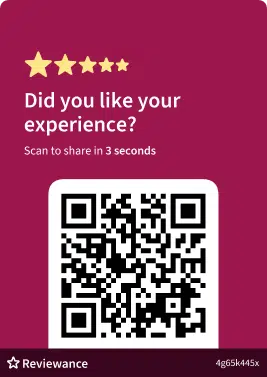
Create your review QR codes
Your business name
First month only $1, then just $9.99/month. Cancel anytime.
Instead of depending on acrylic stands placed around the restaurant, every member of our team could instantly display a personalized QR code directly from their own phone. Whether customers were paying the bill, thanking a server, or complimenting the chef, we could ask for a review at the exact moment the positive experience was still fresh. That small difference completely changed our workflow. Even more importantly, Reviewance understands something many review tools overlook. Not every customer should follow the exact same path.
Customers who had an outstanding experience could easily leave a public Google review, while customers who wanted to raise a concern could privately share feedback first. That gave us an opportunity to resolve issues, improve our service, and learn from customer experiences before frustration turned into a public complaint. Instead of collecting reviews blindly, we started managing our customer experience more intelligently.
The Biggest Lesson
Looking back, I don't think this experiment was really about QR codes. It was about understanding human behavior. People don't wake up intending to ignore your review request. They simply become busy. If you ask someone to leave a review tomorrow, next week, or "whenever they have time," you're competing with everything else happening in their life. If you ask them while they're still smiling about the meal they just finished, the decision becomes almost effortless.
That's why mobile QR codes worked so well for us. Not because they're innovative. Because they're immediate.
Last but Not The Least
If you're searching for ways to increase Google reviews, my advice is simple. Stop trying to remind customers after they've already left. Instead, make it incredibly easy for them to leave a review while they're still enjoying the experience you've worked so hard to create.
For our restaurant, that single change produced better results than emails, SMS campaigns, receipts, or business cards ever did. Sometimes the biggest improvement doesn't come from asking more customers. It comes from asking them at exactly the right moment.