
In the restaurant industry, reputation is no longer built only through food quality or service. Today, visibility on Google directly influences customer decisions. Before choosing where to eat, most people search on Google Maps, compare ratings, read reviews, and look at recent customer experiences. A restaurant with hundreds of authentic positive reviews immediately builds trust. A restaurant with few reviews — even if the food is excellent — often gets ignored.
Reviewance helps restaurants systematically collect more Google reviews, improve online reputation, increase local search visibility, and create a smoother customer feedback process through smart QR-based review flows.
Whether you operate a single café, a fine dining restaurant, a food truck, or a multi-location restaurant chain, Reviewance makes restaurant review management scalable and simple.
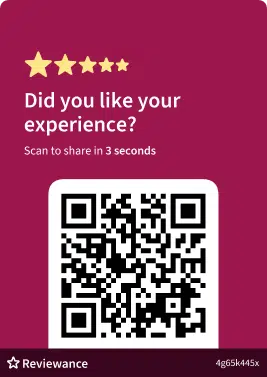
Create your review QR codes
Your business name
First month only $1, then just $9.99/month. Cancel anytime.
Why Google Reviews Matter for Restaurants
For today’s restaurateur, Google reviews represent much more than simple customer feedback; they are the primary engine driving Local SEO and the ultimate decider in the consumer’s path to purchase. In the digital age, the customer journey almost always begins with a high-intent search on Google Maps. When a diner looks for "the best Italian restaurant nearby" or "top-rated breakfast spots," they aren't just looking for a menu—they are looking for a reason to choose you over the competition. Google reviews serve as the definitive social proof that converts a casual searcher into a confirmed reservation or a physical walk-in.
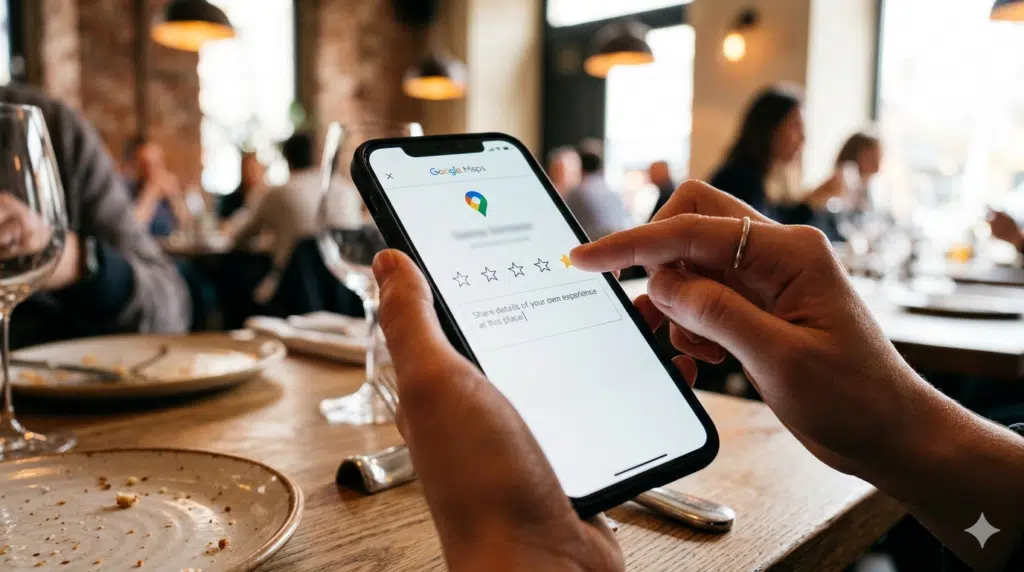
The impact of these reviews starts at the discovery phase, where Google’s algorithm uses review data as a core ranking signal. High-volume, high-quality feedback tells Google that your business is prominent and reliable, which directly pushes your restaurant toward the top of the Google Maps 3-Pack. This visibility is the most valuable real-estate in the hospitality industry, as restaurants appearing in these top spots capture the vast majority of clicks and "Get Directions" requests. Beyond pure rankings, a healthy review profile establishes immediate brand credibility. A customer will almost instinctively skip over a business with a 3.5-star rating to find one with a 4.5-star average, regardless of how close the lower-rated option is geographically.
Furthermore, the "freshness" and "consistency" of your ratings are vital metrics that influence long-term customer trust and repeat behavior. Google prioritizes businesses with recent activity, meaning a restaurant that hasn't received a review in two months appears stagnant or potentially declining in quality. Consistent engagement—where the restaurant actively receives and responds to feedback—signals a high level of operational excellence and care. This consistency is especially crucial for franchise reputation management, where a unified, positive brand image across multiple locations ensures that a diner knows they can expect the same quality at every branch.
Ultimately, Google reviews act as a powerful conversion tool that dictates reservation decisions and walk-in traffic. They provide the "Zero Moment of Truth" where a potential guest evaluates the atmosphere, service speed, and dish quality through the eyes of previous diners. By maintaining a high review count and a steady stream of positive sentiment, a restaurant effectively builds an automated marketing machine. This digital reputation doesn't just improve your standing on a map; it creates a cycle of trust that drives higher click-through rates, more phone calls for bookings, and a significant increase in bottom-line revenue.
Follow-up Question: Since we’ve established that "recency" and "ranking signals" are key to your SEO, are you currently seeing a gap between the number of people dining in your restaurant and the number of new reviews appearing on your Google profile each week?
Create your review QR codes
Your business name
First month only $1, then just $9.99/month. Cancel anytime.
Should Every Restaurant Have Google Business Profile (GBP)?
When asking whether a restaurant needs a Google Business Profile (GBP), the answer is an absolute, unwavering yes. In the current digital landscape, not having a claimed and optimized profile is the equivalent of operating a restaurant without a sign on the door—or worse, having a sign that someone else wrote for you. A Google Business Profile is the foundational bedrock of your digital identity; it is the first thing a customer sees when they search for your name and the primary way they discover you when they don’t even know you exist yet.
The primary reason for this necessity is absolute visibility. We live in the era of "near me" searches. Whether it is a local resident looking for a quick lunch or a tourist searching for a high-end dinner, the vast majority of these journeys begin on Google Maps. If you do not have a GBP, you are effectively invisible to this massive pool of high-intent traffic. Even if you have a stunning website or a massive social media following, those platforms often require multiple clicks to reach. A Google Business Profile, however, places your address, phone number, menu, and—most importantly—your reviews directly in front of the user at the exact moment they are ready to spend money.
Beyond mere visibility, a GBP allows you to control the narrative of your business. If you do not claim your profile, Google will often generate one for you based on third-party data and user-submitted photos. This can lead to disastrous inaccuracies, such as incorrect opening hours, outdated menus, or misleading photos that do not represent your brand’s current aesthetic. By owning your profile, you ensure that every customer receives the most accurate and enticing information possible. This control extends to the "Book a Table" or "Order Online" buttons, which can be integrated directly into your profile, turning a simple search result into a direct revenue-generating transaction.
From a Local SEO perspective, your Google Business Profile is the single most important factor in determining where you rank in search results. Google prioritizes businesses that have complete, active, and well-reviewed profiles. Every time you update a photo, respond to a review via Reviewance, or post a "Google Update" about a new seasonal dish, you are sending a signal to the algorithm that your restaurant is active and relevant. This creates a powerful feedback loop: higher rankings lead to more customers, more customers lead to more reviews, and more reviews lead to even higher rankings.
Furthermore, a GBP serves as your digital seal of authenticity. In an age of ghost kitchens and inconsistent delivery apps, a robust Google profile with a high volume of reviews provides the "blue checkmark" level of trust that today's diners demand. They want to see photos of the food taken by actual guests, read about the experiences of people who visited last night, and see how the management handles feedback. This transparency is what builds the brand loyalty that keeps a restaurant thriving in a competitive market.
Finally, it is important to remember that Reviewance is designed to supercharge this specific asset. While the Google Business Profile provides the "house" for your digital reputation, Reviewance provides the "engine" that keeps it growing. Without a profile, there is nowhere for your happy customers to leave the praise they want to give. By establishing your GBP as the destination and Reviewance as the high-speed rail that brings customers there, you create a systematic growth machine that works 24/7 to ensure your restaurant remains the top choice in your local community.
Don’t Have a Google Business Profile Yet? Here Is How to Claim Your Digital Real Estate
If you have realized that your restaurant is missing from Google Maps or that you have no way to respond to the comments people are already leaving about your food, you are essentially leaving your front door unlocked and unattended. Operating without a Google Business Profile (GBP) means you are conceding your local market share to competitors who have taken the ten minutes required to claim their space. Fortunately, establishing your presence is a straightforward process, and it is the absolute prerequisite for using a sophisticated reputation management system like Reviewance.
To begin the journey of digital ownership, your first destination is the official Google Business Profile portal. Once there, you will sign in using the Google account you wish to associate with your business—ideally a professional or company-specific email. The process starts with a simple search: type in your restaurant's name to see if a profile already exists. In many cases, Google or a well-meaning customer has already created a "placeholder" profile. If your restaurant appears, you can select the option to "Claim this business" or "Own this business." If nothing appears, you will select the option to add your business to Google.
The setup wizard will guide you through a series of critical data points that define how the world sees your brand. You will need to select the most accurate Business Category—be specific, as choosing "Authentic Neapolitan Pizzeria" is far more effective for SEO than simply choosing "Restaurant." You will then enter your physical address. If you are a traditional dine-in establishment, this is where you mark your location on the map. If you operate a delivery-only "ghost kitchen," you can instead specify your Service Area, ensuring you appear in searches within the specific neighborhoods you serve without revealing a private kitchen address.
The final and most crucial stage of this process is Verification. Google must ensure that you are the legitimate owner before granting you the power to edit information or manage reviews. Most restaurants are verified via a phone call, a text message, or an automated email. However, in some instances, Google may send a physical postcard containing a unique verification code to your restaurant's address, which typically arrives within five business days.
It is important to note: You cannot start collecting, managing, or analyzing reviews through Reviewance until your profile is fully verified. Once that blue "Verified" checkmark appears on your dashboard, your digital storefront is officially open for business. From that moment on, you can integrate your profile with Reviewance to begin transforming every meal served into a glowing 5-star signal that attracts the next wave of hungry diners.
Create your review QR codes
Your business name
First month only $1, then just $9.99/month. Cancel anytime.
The Science of Ranking: Essential Criteria for Google Maps Domination
Simply having a Google Business Profile is the starting line; winning the race requires understanding the specific signals Google uses to rank one restaurant above another. The following criteria, ranked by their relative impact on the local algorithm, represent the "ranking set" you must optimize to dominate your local market. Reviewance is specifically built to automate and optimize these exact variables.
1. Keyword and Location Relevance within Reviews
Google doesn't just count reviews; it reads them. When customers include Specific Keywords (e.g., "best wood-fired pizza") and City or Neighborhood names (e.g., "in Manhattan" or "near Soho"), it creates a massive boost in relevance.
- The Goal: Encourage guests to mention your signature dishes and your specific area.
- Why it works: These keywords act as "hyperlinks" for the algorithm, telling Google exactly what you serve and where you are, making you the top choice for high-intent searches like "sushi near me."
2. The "Velocity" and Consistency Metrics
Google prioritizes active businesses over stagnant ones. The algorithm looks at your Average Yearly, Monthly, and Weekly Reviews to ensure you are currently popular.
- New Reviews Last Year/Month: A burst of 100 reviews three years ago is less valuable than 10 reviews received in the last 30 days.
- Steady Growth: Consistent feedback signals to Google that your quality is maintained, ensuring your ranking remains stable rather than dropping off after a grand opening.
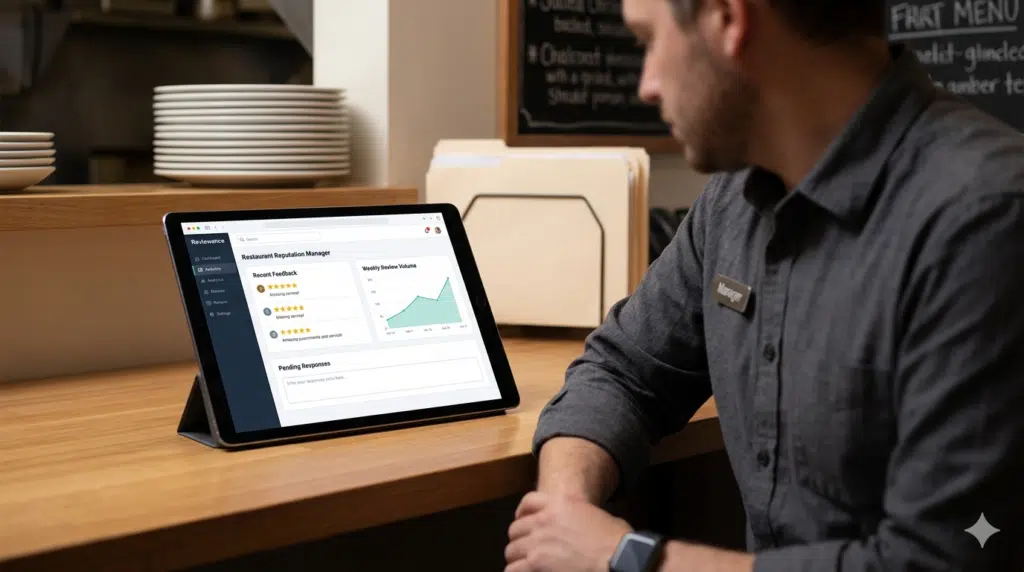
3. Response Management: The Engagement Signal
A major portion of your ranking score is determined by how you interact with your customers. Google evaluates the Total Number of Reviews Responded To and, crucially, the Number of Reviews Not Responded To.
- Responsiveness: Replying to every review (both positive and negative) signals to Google that you are a managed, professional entity.
- Negative Review Mitigation: Leaving a negative review unanswered is a double penalty; it hurts your reputation and lowers your SEO score. Reviewance helps you track the Number of Negative Reviews Responded To to ensure no guest is left ignored.
4. Semantic Search and "Near Me" Signals
Modern search behavior relies heavily on the "Near Me" intent. Google tracks the Number of Reviews with "Near Me" or City and State mentions.
- Local Context: When a review says, "This is the best brunch place near me in downtown Chicago," it provides the ultimate localized signal.
- Hyper-Local Authority: Accumulating these signals through Reviewance's automated flows helps you capture traffic from diners who are literally standing a few blocks away.
5. Competitive Rating Benchmarks
Google compares your rating against the Average Page 1 Review Rating for your category.
- The Threshold: If the top-ranking restaurants in your city have an average of 4.6 stars, and you are sitting at 4.2, Google is less likely to show you in the "Top 3 Pack."
- Quality Control: Reviewance’s feedback routing helps keep your average high by resolving issues privately before they can drag your average below the competitive threshold.
Summary Table: Google Maps Ranking Criteria
| Criteria Type | Core Focus | Why It Matters for Your Restaurant |
| Contextual | Keywords & City Mentions | Tells Google what you serve and exactly where you are. |
| Temporal | Review Velocity (Weekly/Monthly) | Proves to Google that you are a currently active and popular "hotspot." |
| Interactive | Response Rates | Demonstrates professional management and high customer care levels. |
| Comparative | Average Rating vs. Competitors | Determines if you are "worthy" of appearing on the first page of results. |
By focusing on these data-driven criteria, Reviewance doesn't just get you "more reviews"—it strategically builds the specific signals that force Google’s algorithm to rank you higher, drive more clicks, and ultimately fill more tables.
Why Your Restaurant is Struggling to Collect Google Reviews
Understanding why the reviews aren't coming in is the first step toward fixing your digital reputation. Most restaurant owners assume that "if the food is good, they will write a review," but in reality, the barriers to receiving feedback are often structural rather than culinary. Here are the four primary reasons why your business might be hitting a wall:
1. You Haven't Claimed Your Google Business Profile (GBP)
This is the most fundamental barrier. If you do not have a verified Google Business Profile, there is literally nowhere for your customers to leave their praise. Even if a customer is highly motivated to help you, they won't find a "Write a Review" button associated with your business on Google Maps. Without this digital anchor, all potential social proof is lost into the void.
2. The Product or Service Quality Gap
While it may be hard to hear, sometimes the lack of reviews (or the presence of negative ones) stems from the experience itself.
- Consistency: If the food is excellent but the service is slow, or if the atmosphere is great but the cleanliness is lacking, guests often leave feeling "neutral."
- The "Meh" Factor: Neutrality is the enemy of reviews. Customers tend to write reviews when they are either extremely delighted or extremely frustrated. If your service is just "okay," guests won't feel the emotional spark required to put effort into a review.
3. The Absence of a Proper Collection Tool
This is where 90% of successful restaurants fail. Even with great food and a verified profile, you will fail to collect reviews if you don't have a dedicated system in place. Without a tool like Reviewance, you are fighting against three powerful forces of human psychology:
- The "Forgetfulness" Factor: A guest may have a wonderful meal, pay the bill, and genuinely intend to leave a review. However, the moment they step out the door, life takes over. By the time they are home, the sensory details of the meal have faded, and the intention to review is forgotten. You must capture the review while the flavor is still on their palate.
- The "Discovery" Friction: Expecting a customer to open Google, type in your restaurant's name, find the correct location (especially if you have a common name), and navigate to the review tab is asking too much. If they can’t find you in under five seconds, they will give up.
- The "Inertia" (Laziness) Barrier: Writing a review feels like "work." If a guest has to search for you, they feel lazy or unmotivated to complete the task. Reviewance removes this friction. By scanning a QR code, the review screen pops up instantly. We turn a 2-minute "chore" into a 15-second "tap," making it easier for the guest to say yes than to say no.
4. The Lack of a Strategic "Ask"
Many restaurants fail simply because they never ask. If your staff isn't trained to prompt a review and you don't have visual cues (like QR codes on table tents or receipts), guests assume you don't care about their digital feedback. A "Proper Tool" serves as a silent, non-intrusive reminder that their opinion matters to the business.
Follow-up Question: Of these three barriers—forgetfulness, discovery friction, or guest laziness—which do you think is currently the biggest reason your happy customers are leaving without sharing their experience on Google?
Create your review QR codes
Your business name
First month only $1, then just $9.99/month. Cancel anytime.
Overcoming the Barriers: Your Strategic Blueprint to Google Review Dominance
Knowing the challenges is only half the battle; the other half is implementing a bulletproof system to overcome them. To transform your restaurant into a review-generating powerhouse, you need to align five critical pillars. When these pillars work in harmony—coordinated through Reviewance—your Google rating becomes an unstoppable growth engine.
1. The Hygiene Factor: Perfecting Product and Service
Before you ask for a review, you must ensure your "Hygiene Factors" are met. In the restaurant industry, these are the non-negotiables: Food Quality, Cleanliness, and Service Speed.
- The Foundation: You cannot "marketing" your way out of a bad meal. A proper tool will amplify your current reality; if your service is great, it amplifies greatness.
- The Reviewance Advantage: Our private feedback routing acts as an early warning system. If your "Hygiene Factors" are slipping, Reviewance tells you privately, allowing you to fix the kitchen or staff issues before they turn into public 1-star reviews.
2. The Tools: Moving Beyond "Hope"
Manual review collection is inefficient and awkward. You need a professional infrastructure designed specifically for high-volume hospitality environments.
- Dynamic QR Technology: Instead of a static link, use smart QR codes that are mobile-optimized and branded.
- The Reviewance Advantage: We provide a full suite of physical and digital tools—from table tents to bill folder inserts—that act as a 24/7 "silent solicitor" for your business.
3. The Power of Timing: Capturing the "Peak End"
In psychology, the Peak-End Rule suggests that people judge an experience largely based on how they felt at its peak and at its end. In a restaurant, this is the moment the last plate is cleared or the bill is presented.
- Strike While the Iron is Hot: If you ask for a review three days later via email, the emotional connection is gone. You must ask when the guest is still sitting at the table, feeling satisfied and pampered.
- The Reviewance Advantage: Our system is designed for "at-the-table" interaction. By placing the "Ask" within the payment flow or the bill folder, we hit the perfect psychological window for a "Yes."
4. The Ease Factor: The Path of Least Resistance
Every additional tap, scroll, or search is an opportunity for a customer to quit. To get more reviews, you must make the process so easy that it feels harder to say "no" than to say "yes."
- Zero-Friction UX: Your goal is to get the customer to the Google "Star Rating" screen in under 5 seconds.
- The Reviewance Advantage: We eliminate the need for customers to search for your name or navigate Google Maps. One scan takes them directly to your specific review page. No typing, no searching, no frustration.
5. The System: Consistency Over Effort
A "System" is a process that works even when you are busy. You shouldn't have to remind your staff to ask for reviews every single shift; the environment should do it for you.
- Automation: A successful restaurant doesn't rely on luck. It relies on a systematic workflow where every guest is presented with an opportunity to share their experience.
- The Reviewance Advantage: This is exactly what Reviewance provides—a Review Management System. We turn review collection from a "manual chore" into an "automated byproduct" of your daily operations.
That Means Reviewance: The All-in-One Solution
When you combine Product Excellence, Professional Tools, Perfect Timing, Extreme Ease, and a Reliable System, the result is a massive, compounding increase in your Google ranking.
Reviewance is the synthesis of these five pillars. It is the bridge between a happy diner and a 5-star public rating. By choosing Reviewance, you aren't just buying a QR code; you are investing in a proven psychological and technical framework that ensures your restaurant stays at the top of Google Maps, attracts more diners, and stays ahead of the competition.
Follow-up Question: We have built the perfect strategy—from establishing your profile to mastering the timing of the "ask." Are you ready to see how the Reviewance dashboard can turn these individual reviews into actionable data that helps you manage your staff and menu more effectively?
| Industry | Where Should the QR Code Be Placed? | When Should the Review Request Be Made? | Who Should Ask for the Review? | How Should the Review Be Requested? |
|---|---|---|---|---|
| Restaurants | Next to the cashier, inside the bill folder, printed on small cards included with takeaway or delivery orders | After the meal, during a pleasant conversation or dessert moment | Waiter, server, or chef | By showing a QR code on a mobile phone or printed material |
Real-Life Restaurant Review Scenarios: From Operational Chaos to 5-Star Success
Reading about SEO theory is one thing; managing a dining room during a Saturday night rush is another. To truly master your online reputation, you must understand how review collection works in the "trenches" of daily operations. Here are the most common real-world scenarios and how the right system transforms them.
Scenario 1: “The Busy Dinner Rush Problem”
Every restaurateur knows the feeling: the house is full, the kitchen is at capacity, and your servers are running at 110%. In this environment, asking for a review is usually the first thing that gets forgotten.
- The Staff Fatigue: Even your best waiters stop asking for feedback when they are juggling eight tables. They don't want to "bother" a guest who has already waited 20 minutes for their main course.
- The "Pay and Run" Effect: During peak hours, guests often want to settle the bill and leave quickly to make room for the next reservation or simply to get home.
- The Fine Dining vs. Fast Casual Gap: In fine dining, an intrusive "verbal ask" can break the atmosphere. In fast-casual, the interaction is too brief to build the rapport needed for a favor.
The Solution: Reviewance acts as your "silent extra waiter." By having QR codes integrated into the bill folder or table tents, the "ask" happens automatically without your staff saying a word. It captures the high of a great meal even when the service is moving at lightning speed.
Scenario 2: “The Happy Customer Who Never Leaves a Review”
This is the most common—and most dangerous—scenario. Most of your diners leave your restaurant smiling, full, and satisfied. Yet, they never open Google. Why?
- Restaurant Review Psychology: Humans are biologically programmed to alert others of "danger" (a bad meal), but we internalize "safety" (a good meal). This means a customer who had a 3-star experience is often more motivated to write a review than one who had a 5-star experience.
- The Problem of "Silent Satisfaction": If there is no friction-free way to leave a review, only the most extreme emotions (usually negative) will drive a customer to seek out your Google profile.
- Why Customers Don’t Leave Reviews: It’s rarely because they didn’t enjoy the food; it’s because you didn’t provide a "trigger" at the right moment.
The Solution: You must turn "Silent Satisfaction" into "Vocal Advocacy." By placing a Reviewance QR code right in front of them as they wait for their credit card to process, you give that silent, happy customer a 10-second outlet to express their gratitude.
Scenario 3: “The Turning Point: Converting the Unhappy Guest”
This is where true reputation management happens. Imagine a guest who felt their steak was overcooked or their drink took too long to arrive. If they leave in that state, they are a "1-star time bomb" waiting to go off on Google Maps.
- The Power of Immediate Interest: Most guests just want to be heard. When a guest scans a Reviewance code and chooses a low rating, they are immediately routed to a private feedback form instead of the public Google page.
- The Recovery Miracle: This gives you a "Golden Window." Management receives an instant alert. If you walk over to that table, offer a sincere apology, or perhaps a complimentary dessert, you have engaged in Service Recovery.
- The Result: A guest who was about to write a 1-star review often becomes your most loyal 5-star advocate. They don’t just write about the food; they write about the exceptional care and attention they received when things weren't perfect. People don't expect perfection; they expect to be valued.
Scenario 4: “The Delivery & Takeaway Blind Spot”
You send out a perfect meal in a delivery bag. The customer eats it at home, loves it, but you have zero face-to-face interaction with them. They are the hardest reviews to get because they are physically removed from your business.
- The Strategic Prompt: By including a Reviewance QR sticker on the takeaway bag or a small "Thank You" card inside, you bridge the gap between their dining room and your Google profile.
- Building Reputation Outside Your Walls: This allows your delivery business to contribute to your overall Google Maps ranking, ensuring that even your "invisible" customers are helping you stay at the top of the search results.
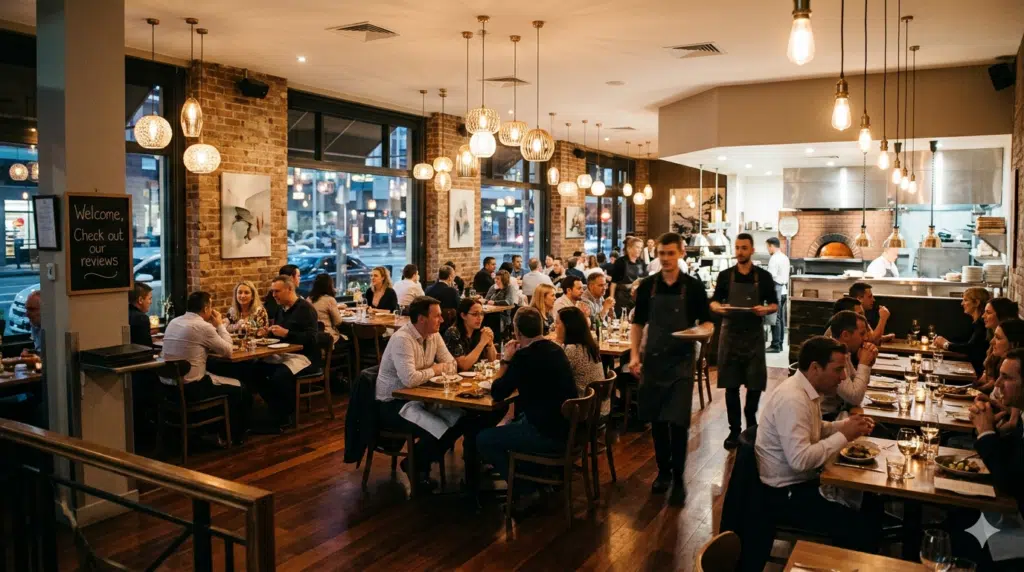
Strategic Placement: The Best Places to Put QR Codes in Your Restaurant
A QR code is only as effective as its visibility and timing. Simply sticking a code on a wall isn't enough; you must place it where your guests are most emotionally engaged and physically capable of spending 15 seconds to support you. Research shows that review conversion is highest during the "Peak Satisfaction Window"—the brief period after a great meal but before the guest mentally "checks out" and leaves the building.
Here is a breakdown of the high-conversion zones for Reviewance QR codes:
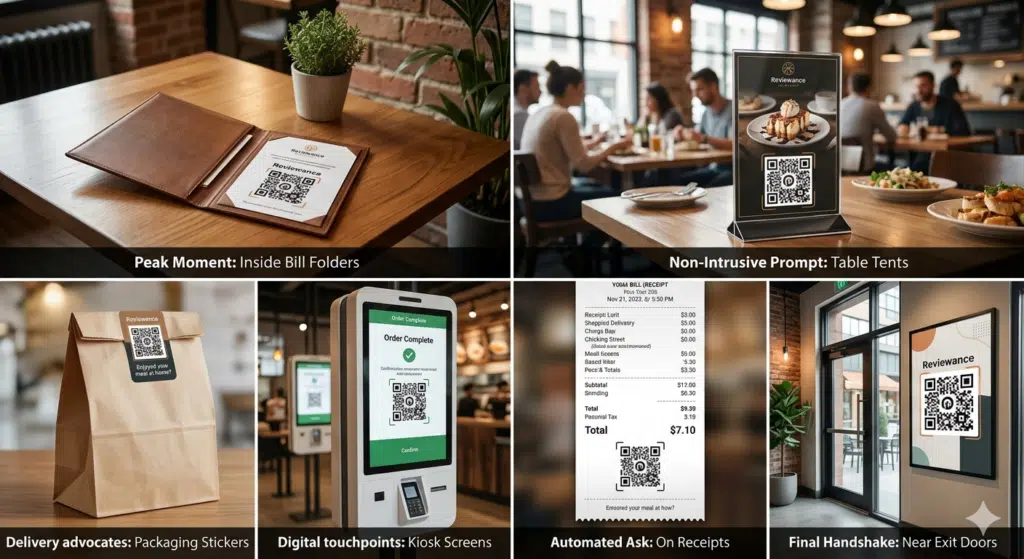
1. Inside Bill Folders (The #1 Conversion Spot)
The moment of payment is the "Golden Hour" of review collection. As guests wait for their credit card to process or their change to arrive, they have a "dead minute" of downtime.
- The Experience: Placing a sleek Reviewance card inside the bill folder turns a mundane waiting period into a moment of advocacy.
- The Conversion Hack: When a waiter says, "I've included a quick way to share your feedback in the folder," it feels like a personal request rather than an automated prompt.
2. On Table Tents & Pedestals
For casual dining, cafes, or bars where guests linger, table tents provide a constant but non-intrusive reminder.
- The Experience: While waiting for a second round of drinks or after finishing a delicious dessert, guests naturally look around. A well-designed table tent catches their eye at the peak of their comfort.
- The UX Tip: Keep the design clean. A simple "Enjoying your time? Scan to let us know!" works far better than a wall of text.
3. On Takeaway Packaging & Delivery Bags
Your delivery customers are your "invisible" advocates. Since you lack face-to-face interaction, the packaging must do the talking for you.
- The Experience: A high-quality sticker on the outside of the bag or a "Thank You" card placed right on top of the food container ensures the QR code is the first thing they see when they prepare to eat.
- The UX Tip: Place the QR code on the top flap of the bag so it is impossible to miss when unboxing the meal.
4. Near the Exit Door or Hostess Stand
While some believe the cashier is the best spot, it is often too late—the guest is already focused on their next destination. However, the exit area works perfectly for "Quick Service" restaurants (QSR).
- The Experience: A "Rate us on your way out!" sign near the door captures those final positive vibes as they leave.
- The Conversion Hack: Use a larger, eye-level poster here. It acts as a final digital "handshake" as the guest departs.
5. On Digital Receipts & Self-Ordering Kiosks
In the age of automation, your digital touchpoints should be review-ready.
- The Experience: If you send receipts via email or SMS, include a direct Reviewance link. For self-ordering kiosks, show the QR code on the "Order Complete" or "Thank You" screen.
- The UX Tip: Ensure the digital link is a single-click experience. Friction is the enemy of digital reviews.
Pro-Tip: Psychology of Placement
"Many restaurants place QR codes only at the entrance, but this is a missed opportunity. The highest conversion moment is typically when the guest feels emotionally satisfied—immediately after the last bite of dessert or while paying the bill. Strategic placement is about catching the guest in their most positive state."
Comparison of QR Code Placements
| Placement | Timing | Effort Level | Conversion Potential |
| Bill Folder | During Payment | Very Low | Extreme |
| Table Tent | Mid-Meal/Dessert | Low | High |
| Delivery Bag | At Home | Moderate | High |
| Kiosk/Receipt | Post-Purchase | Low | Moderate |
Create your review QR codes
Your business name
First month only $1, then just $9.99/month. Cancel anytime.
Tailoring the Strategy: How Different Restaurant Types Should Collect Reviews
Google reviews are a universal currency, but the way you collect them depends entirely on your service model. A high-end steakhouse cannot use the same tactics as a busy food truck. To maximize conversion, your review strategy must match your customer’s psychology and the rhythm of your service.
1. Fine Dining Restaurants: The Art of Discretion
In a luxury environment, an intrusive "ask" can break the sophisticated atmosphere you’ve worked so hard to create.
- Ideal Timing: After the final course, specifically when the bill is presented.
- Ideal Ask Style: Subtle and personal. "We hope your evening was exceptional; your feedback helps us maintain our standards."
- QR Placement: Hidden elegantly inside a high-quality leather bill folder.
- Customer Psychology: Fine dining guests value exclusivity and excellence. They are more likely to write detailed, high-quality reviews if the request feels like an invitation to an elite circle of critics.
2. Cafes & Coffee Shops: The "Lingering" Opportunity
Cafes often have a mix of "grab-and-go" and "work-from-home" customers who stay for hours.
- Ideal Timing: While the customer is waiting for their brew or during their second cup.
- Ideal Ask Style: Casual and friendly. "Fueling your work day? Let us know how we’re doing!"
- QR Placement: On table tents, coffee cup sleeves, or the back of the Wi-Fi password card.
- Customer Psychology: These guests are often on their phones anyway. By providing a QR code, you give them a 15-second productive distraction.
3. Fast Food & Quick Service (QSR): The Instant Feedback
Speed is the priority here. You have a very narrow window to capture the customer's attention.
- Ideal Timing: Immediately at the pickup counter or on the tray liner.
- Ideal Ask Style: Short and punchy. "How was your meal? Scan to rate us!"
- QR Placement: Large, visible decals on self-ordering kiosks and digital receipts.
- Customer Psychology: QSR customers make decisions fast. If the review takes more than 10 seconds, they won't do it. The process must be lightning-fast.
4. Food Trucks: The Pickup Moment
Food truck customers are often standing or walking. You must catch them before they move away from the window.
- Ideal Timing: Right at the hand-off of the order.
- Ideal Ask Style: Energetic. "Enjoy the tacos? Give us a shout on Google!"
- QR Placement: A large, weather-proof decal next to the pickup window.
- Customer Psychology: Food truck fans are often loyal and "local." They want to support small, mobile businesses. A visible QR code makes it easy for them to show that support instantly.
5. Hotel Restaurants: The Traveler’s Trust
Hotel guests rely heavily on reviews to decide if they should eat "in-house" or go explore the city.
- Ideal Timing: During breakfast service or checkout.
- Ideal Ask Style: Focus on the "stay" experience. "Did our breakfast start your day right?"
- QR Placement: In-room dining menus and at the hostess stand.
- Customer Psychology: Travelers are in "research mode." They value current, local information and are usually happy to help other travelers find the best spots.
6. Buffet & All-You-Can-Eat: The Satiated State
Buffet guests often leave feeling very satisfied (and very full). This is a prime state for a positive review.
- Ideal Timing: While they are resting after their final trip to the buffet.
- Ideal Ask Style: "Found your favorite dish today? Share it with us!"
- QR Placement: Small stands on the table or near the dessert station.
- Customer Psychology: The "peak" of satisfaction happens right after they’ve tried a variety of dishes. Capturing that variety in a review is great for SEO keywords.
7. Delivery-Only (Ghost) Kitchens: The Digital Bridge
Without a physical dining room, your only connection is the digital one.
- Ideal Timing: The moment the bag is opened.
- Ideal Ask Style: Gratitude-based. "Thanks for ordering! Let us know how we did."
- QR Placement: High-quality stickers on the delivery seal and a printed insert inside the bag.
- Customer Psychology: These customers are already in a digital mindset (they ordered via an app). A QR code is a natural extension of their user journey.
8. Franchise & Multi-Location Chains: The Consistency Standard
For franchises, the goal is to show that every location meets the brand's high standards.
- Ideal Timing: Integrated into the checkout process.
- Ideal Ask Style: Professional and brand-aligned. "How was your [Brand Name] experience today?"
- QR Placement: Digital receipts, loyalty app notifications, and counter displays.
- Customer Psychology: Franchise customers expect consistency. They review based on whether the specific location met the global brand promise.
Summary Table: Google Review Strategy by Type
| Restaurant Type | Key Strategy | Primary QR Spot | Psychology |
| Fine Dining | Discretion | Bill Folder | "I am an expert critic." |
| Cafe | Convenience | Table Tent / Wi-Fi | "I'm already on my phone." |
| Food Truck | Immediacy | Pickup Window | "I want to support local." |
| Ghost Kitchen | Packaging | Bag Seal | "I live in a digital world |
Restaurant Google Review Examples (With Analysis)
In the world of local SEO, not all reviews are created equal. Google’s algorithms prioritize reviews that provide specific details, keywords, and authentic sentiment. Below are three examples of high-impact reviews and an analysis of why they help a restaurant climb the search rankings.
Example 1: The "Local Authority" Review
“The best hand-tossed pizza in Brooklyn. We tried the Margherita and the service was incredibly fast. A must-visit if you're near Prospect Park!”
| SEO Element | Analysis |
| Cuisine Keywords | Contains "hand-tossed pizza," telling Google exactly what you serve. |
| Geo-Tagging | Mentions "Brooklyn" and "Prospect Park," boosting local relevance. |
| Service Sentiment | Positive phrasing like "incredibly fast" improves your star-rating algorithm. |
| Impact | Increases the chances of appearing in the "Pizza near me" Map Pack. |
Example 2: The "Specific Dish" Review
“Searching for authentic sushi in downtown Chicago? This is it. The Bluefin Tuna was fresh, and the omakase menu offers great value. Best Japanese restaurant in the Loop.”
| SEO Element | Analysis |
| Long-Tail Keywords | Uses "authentic sushi" and "omakase menu," which are high-intent search terms. |
| Category Reinforcement | Explicitly mentions "Japanese restaurant," confirming your business category. |
| Neighborhood Detail | Mentions "The Loop," helping Google pin your exact micro-location. |
| Impact | Helps the restaurant rank for specific dish-related searches (e.g., "Best Omakase Chicago"). |
Example 3: The "Atmosphere & Occasion" Review
“Perfect outdoor dining spot for a brunch date. They have a great cocktail list and the staff made us feel very welcome. Best patio in Austin!”
| SEO Element | Analysis |
| Feature Keywords | Hits "outdoor dining," "brunch," and "patio"—terms users filter for. |
| Intent Keywords | "Brunch date" helps the restaurant show up for "romantic" or "date night" queries. |
| Staff Mention | Reinforces a positive User Experience (UX) signal. |
| Impact | Optimizes the listing for "amenity" searches (e.g., "restaurants with patios"). |
Why This Matters for Your SEO
Google uses Natural Language Processing (NLP) to "read" your reviews. When customers use specific keywords and locations, they are essentially doing your SEO work for you.
Pro Tip: Don't just wait for these reviews—encourage them! When asking customers for feedback, ask them to mention their favorite dish or the neighborhood. This creates a feedback loop that drives organic traffic straight to your front door.
How Many Google Reviews Does a Restaurant Need?
"How many reviews do I need to rank #1?" is the golden question for restaurateurs. The short answer is: One more than your closest competitor.
However, in the world of SEO, quantity isn't just a vanity metric—it’s a signal of authority and "freshness." The number of reviews you need depends entirely on your specific environment and market saturation.
The Benchmarks: Local vs. Tourist Hubs
The "magic number" shifts based on your foot traffic and location density. Here are the general industry thresholds:
- Local Neighborhood Café:150+ Reviews
- In a residential area, consistency is key. You need enough reviews to prove you are a staple of the community.
- City-Center Restaurant:500+ Reviews
- In high-competition zones (like downtown London or NYC), you are fighting for the "Map Pack." 500 is often the baseline to be taken seriously by the algorithm.
- Tourist-Heavy Area:1,000+ Reviews
- In spots like Times Square or near the Eiffel Tower, volume is king. High turnover means customers expect to see thousands of data points to verify your quality.
Key Factors Influencing Your Target Number
To determine your specific goal, you must analyze these four pillars:
1. Competition Density
Search for your primary keyword (e.g., "Italian Restaurant [City]"). Look at the top three results in the Google Maps Pack. If they all have over 800 reviews and you have 200, you have a "review gap" that needs to be closed to improve your ranking.
2. Small Town vs. Big City
In a small town, 50 glowing reviews might make you the highest-rated spot in the county. In a metropolis, 50 reviews make you look like you opened last week. Google scales its "authority" requirements based on the total population and business density of the area.
3. Niche vs. General Cuisine
- General (Pizza, Burgers, Coffee): High volume is required because the competition is massive.
- Niche (Ethiopian, Molecular Gastronomy, Vegan Gluten-Free): You can dominate with fewer reviews because the search volume is lower and the competition is specialized.
4. The "Minimum Threshold" for Trust
Regardless of location, 10-15 reviews is the absolute minimum threshold. Below this, Google’s algorithm lacks the "confidence" to display your business in prominent search results, and customers often perceive the listing as "unverified" or "risky."
The "Velocity" Rule
It’s not just about the total count; it's about Review Velocity. > Important: If you have 1,000 reviews but the last one was from 2023, Google will treat you as "stale." A restaurant with 300 reviews—with 10 arriving every week—will often outrank a stagnant giant.
The goal isn't just to reach a number; it’s to keep the momentum moving.
Why Some Restaurants Rank Higher Despite Worse Food
We’ve all seen it: a legendary local spot with Michelin-star quality food sits at #8 on Google, while a mediocre chain or a "basic" bistro sits comfortably at #1.
The harsh reality? Google’s algorithm doesn't have taste buds. It doesn't know if your steak is perfectly medium-rare; it only knows how "active" and "relevant" your digital presence is. Here is the "secret sauce" that allows average kitchens to beat elite chefs in search rankings.
1. Review Velocity (The Pulse of Your Business)
Google prioritizes "freshness." A restaurant that receives 10 new reviews every week signals that it is currently popular and relevant. A five-star restaurant with 500 reviews—but only one new review every three months—is considered "stale" by the algorithm.
- The Lesson: Steady growth beats a one-time peak.
2. Photo Freshness & Volume
Google loves data. Restaurants that rank higher often have a constant stream of User-Generated Content (UGC). When customers upload raw, geotagged photos of their plates and the interior, it proves to Google that the business is active.
- Why it works: Recent photos keep users on your listing longer, increasing your "dwell time," which is a massive ranking signal.
3. Owner Response Rate (The 24-Hour Rule)
The algorithm rewards engagement. Restaurants that respond to 100% of their reviews (both good and bad) within 24–48 hours rank higher than those that ignore their customers.
- The Secret: Responding to reviews shows Google you are a "managed" and reliable business, reducing the perceived risk for the searcher.
4. Keyword-Rich Reviews (The "Hidden" SEO)
High-ranking restaurants often have "descriptive" fans. Instead of just saying "Great!", their reviews say:
"Best gluten-free pasta in Soho with a great wine list."
These reviews act as organic SEO anchors. When your customers use your target keywords in their feedback, Google associates your business with those specific search terms.
5. Google Engagement Metrics
Google tracks more than just stars. They track "conversions" from your profile:
- How many people clicked "Call"?
- How many people clicked "Directions"?
- How many people viewed your Menu?
A restaurant with high "intent actions" will consistently outrank a "better" restaurant that has a dormant Google Business Profile.
The Bottom Line: Quality food gets people in the door, but active engagement is what gets them to the door in the first place. You don't need to be the best chef in the city to be the most visible—you just need to be the most "active" in the eyes of the algorithm.
Create your review QR codes
Your business name
First month only $1, then just $9.99/month. Cancel anytime.
How Restaurant Staff Should Ask for Reviews
The biggest hurdle in getting Google reviews isn't a lack of happy customers; it's the awkwardness of the ask. If the request feels like a sales pitch, customers will decline. If it feels like a personal favor, they will likely say yes.
Here is how to train your team to ask for reviews naturally across different dining scenarios.
1. The Waiter Wording (Full Service)
The best time to ask is during the "post-meal glow"—right after the plates are cleared or the bill is presented.
- The Approach: Focus on the connection.
- The Script: > “It was such a pleasure serving you today! If you enjoyed the experience, we’d really appreciate a quick Google review. It’s the best way to support our team.”
2. The Cashier Wording (Quick Service/Café)
In a fast-paced environment, keep it short and benefit-driven.
- The Approach: Direct and helpful.
- The Script: > “Hope you enjoy that latte! If you have a second, leaving us a review on Google really helps a local business like ours grow. Have a great day!”
3. The Takeaway Wording (Delivery & Pick-up)
Since you have less face-to-face time, the "ask" must be high-impact.
- The Approach: Use the packaging as a touchpoint.
- The Script (Verbal): > “Everything is in the bag for you! If the food hits the spot, please let us know on Google—it helps other people find us.”
- The Script (Note/Sticker): > “Loved your meal? Scan here to tell Google! Your feedback keeps our kitchen cooking.”
4. Luxury Restaurant Etiquette (Fine Dining)
In high-end establishments, asking for a review can feel "cheap" if not handled with extreme care.
- The Approach: Frame it as "feedback" rather than a "rating."
- The Script: > “We hope your evening was exceptional. We value our guests' insights immensely; if you felt we met your expectations, we would be honored if you shared your thoughts on Google.”
The "Non-Pushy" Secret: The Rule of Reciprocity
To make the request feel organic, staff should only ask after they have provided a positive moment (e.g., a great recommendation, a quick refill, or a genuine laugh).
Why these scripts work:
- They use "We": Phrases like "helps our team" or "helps us grow" trigger a psychological desire to help a human, not a corporation.
- They are Low-Stakes: Words like "quick" or "if you have a second" reduce the perceived effort for the customer.
- They are Local-First: Reminding guests that you are a "local restaurant" appeals to their desire to support the community.
Master Tip: The "Namedrop" Strategy
Encourage staff to say: "If you leave a review, feel free to mention my name—it really helps the management see how I'm doing!" Result: This significantly increases review conversion because the customer now feels they are directly rewarding their server for good service.
Restaurant Review Response Examples (Templates)
Responding to reviews is more than just polite—it’s a powerful SEO tool. Google explicitly states that responding to reviews improves your local ranking. Every response is an opportunity to use keywords and show potential customers that you care.
1. Responding to Positive Reviews
Goal: Reinforce brand loyalty and include "hidden" SEO keywords.
- The Script: "Hi [Name], thank you so much for the 5-star rating! We’re thrilled you enjoyed our authentic Italian pasta and homemade tiramisu. Our team in [Neighborhood Name] loves hearing such kind words. We can’t wait to see you again for brunch soon!"
- SEO Tip: Mentioning specific dishes and your location reinforces your relevance for those search terms.
2. Responding to General Complaints
Goal: Move the conversation offline and show professionalism.
- The Script: "Dear [Name], we’re sorry to hear that your experience didn’t meet our usual high standards. We value all feedback as it helps us improve. We’d like to learn more about your visit; please contact us at [Email/Phone] so we can make this right."
- Pro Tip: Never use your main keywords (like "best steakhouse") in a negative review response, as you don't want Google to associate your best keywords with a 1-star experience.
3. Responding to Food Quality Complaints
Goal: Address the specific issue and emphasize your standards.
- The Script: "Hello [Name], thank you for bringing this to our attention. We pride ourselves on serving only the freshest locally sourced ingredients, and it’s clear we missed the mark during your visit. We have shared your feedback with our Head Chef to ensure this doesn't happen again."
- Why it works: It acknowledges the error while subtly reminding future readers that you usually prioritize "fresh" and "locally sourced" food.
4. Responding to Slow Service Complaints
Goal: Acknowledge the frustration and explain the "why" without making excuses.
- The Script: "Hi [Name], I sincerely apologize for the wait you experienced. It was an unusually busy Saturday night, and we are currently training new members of our waitstaff to ensure faster service. We hope you’ll give us another chance to provide the seamless experience we’re known for."
5. Responding to Fake Reviews
Goal: Gently flag the review for other readers and Google’s moderation team.
- The Script: "Hi [Name], we take all feedback seriously, but we have no record of a guest with your name or a transaction matching your description in our system. We pride ourselves on our service, and we’d love to discuss this further if you actually visited us. Please reach out to [Email]."
- Strategy: This alerts other customers that the review is likely fraudulent without being overly aggressive or "guilty" sounding.
Best Practices for SEO Responses
| Do | Don't |
| Do include your restaurant name in positive responses. | Don't get defensive or emotional in negative responses. |
| Do use dish names (keywords) in 5-star replies. | Don't use a "copy-paste" template for every guest. |
| Do respond within 24–48 hours. | Don't offer free food/bribes publicly (it encourages more bad reviews). |
The 80/20 Rule: 80% of your response is for the future customers reading the review, and only 20% is for the person who actually wrote it. Always write with your next guest in mind!
The Impact of Reviews on Restaurant Revenue
For a restaurant, Google Reviews are no longer just "feedback"—they are a high-conversion sales channel. In an era where 90% of diners research a restaurant online before visiting, your star rating is your most influential salesperson.
Here is how Google Reviews directly impact your bottom line across five key financial metrics.
1. Click-Through Rate (The Digital Doorway)
Your Click-Through Rate (CTR) is the percentage of people who see your listing and actually click to see your menu or website.
- The Impact: Moving from a 3.5-star rating to a 4.5-star rating can increase your CTR by over 30%.
- SEO Reality: Higher CTR tells Google that your restaurant is a "preferred result," which keeps you locked at the top of the search results.
2. Reservation Conversion
Reviews are the final "nudge" in the booking process.
- The Data: Customers are significantly more likely to complete a reservation on platforms like OpenTable or Resy if your Google profile shows recent, positive sentiment.
- The Revenue Link: High-rated restaurants see a 5–9% increase in revenue for every one-star increase on their profile, primarily driven by higher reservation fulfillment and fewer "no-shows."
3. Walk-In Traffic & "Near Me" Searches
"Restaurant near me" is one of the most common searches on mobile devices.
- The Impact: When a potential customer is standing on a street corner, they aren't looking for the "best food of all time"—they are looking for the lowest risk.
- The Revenue Link: A high volume of reviews (the "social proof" factor) reduces the perceived risk for walk-in diners, leading to a direct increase in spontaneous foot traffic.
4. Average Order Value (AOV)
Believe it or not, reviews can influence how much a customer spends once they sit down.
- The Psychology: When a review mentions a specific high-ticket item (e.g., "The $60 Tomahawk steak was worth every penny"), it pre-sells that item to future guests.
- The Revenue Link: Keyword-rich reviews featuring premium dishes act as "third-party upsells," increasing the likelihood that customers will order more expensive menu items.
5. Tourist Decision Behavior
Tourists are the most review-dependent demographic. Unlike locals, they have no "legacy" knowledge of your brand.
- The Impact: For restaurants in hubs like London, Paris, or Dubai, reviews are the #1 factor in capturing the tourist market.
- The Revenue Link: Tourists often have a higher per-head spend than locals. A strong, keyword-optimized profile (e.g., "Best Breakfast in [City]") ensures you capture this high-value demographic.
The Economic Ripple Effect
| Metric | With Poor Reviews | With Strong Reviews |
| Customer Acquisition Cost | High (Requires Paid Ads) | Low (Organic Google Traffic) |
| Staff Morale | Low (Dealing with complaints) | High (Motivated by public praise) |
| Price Elasticity | Low (Must compete on price) | High (Can charge premium prices) |
Summary: Investing in review management via Reviewance isn't an expense; it’s a revenue-generation strategy. By increasing your visibility and trust, you aren't just getting "stars"—you're getting more chairs filled and higher checks paid.
Common Restaurant Review Mistakes (And How to Fix Them)
Even with the best intentions, many restaurants accidentally sabotage their own SEO or alienate their guests. If your review growth has stalled, you might be falling into one of these common traps.
1. Asking for the Review Too Early
Timing is everything. Asking for a Google review while the main course is still on the table is intrusive. It puts the guest on the spot before they’ve experienced the full "story" of the meal (including dessert and the final service touch).
- The Fix: Wait until the "post-meal glow"—ideally as the check is being handled or right after they’ve finished their final drink.
2. Buying or Incentivizing "Fake" Reviews
It’s tempting to pay for a "boost," but Google’s AI is incredibly sophisticated at detecting unnatural patterns (like 50 reviews appearing from the same IP address in one hour).
- The Risk: Google can "shadowban" your listing or remove it entirely. Authentic, slow-grown reviews are worth 100x more than a sudden spike of fake ones.
3. Only Asking "Loyal" Customers
While regulars are great, only asking people you know well creates a "Review Bubble." New customers want to see that everyone has a good time, not just the owner’s friends.
- The Fix: Create a system where the "ask" is part of the standard service flow for every table, ensuring a diverse and credible range of feedback.
4. The "Hidden" QR Code
If a customer has to go on a treasure hunt to find your review link, they won't do it. QR codes buried at the bottom of a 4-page menu or hidden behind a ketchup bottle are rarely scanned.
- The Fix: Place QR codes strategically on bill folders, table tents, or even a polite "Thank You" card presented with the check.
5. Broken or Complex Review Links
Never ask a customer to "Go to Google and search for us." That is too many steps. Every extra click reduces your conversion rate by 50%.
- The Fix: Use a direct Google Review Link or a dedicated landing page (like a Reviewance link) that opens the review window instantly.
6. Asking During "Payment Stress" Moments
The moment a customer is calculating a tip or looking at a large bill is a high-stress moment. Asking for a favor while they are handing over their credit card can feel tone-deaf.
- The Fix: Separate the "Ask" from the "Transaction." The best time is the 60-second window after the plates are cleared but before the bill is dropped.
Create your review QR codes
Your business name
First month only $1, then just $9.99/month. Cancel anytime.
Google Review Strategies for Multi-Location Restaurant Chains
In a franchise or multi-unit setup, Google views each branch as a distinct local entity. If your Soho branch is thriving but your Kensington branch is ghosting customers, your overall brand authority takes a hit. Here is how to scale your reputation across multiple map markers.
1. Location-Level Reputation Management
Google’s "Map Pack" is hyper-local. A customer in one neighborhood doesn't care about your 4.8-star average in another city; they care about the 3.2-star rating of the branch 500 meters away.
- The Strategy: Set "minimum star thresholds" for every branch. If a specific location falls below a 4.2, it should trigger an automatic operational audit from the central marketing team.
2. Ensuring Branch Consistency
The biggest threat to a chain is service variance. If Reviewance data shows that "slow service" is a trending keyword in 5 out of 10 locations, you have a systemic training issue, not a local one.
- The Strategy: Use sentiment analysis to compare branches. Identify "Star Performers" (branches with high review velocity) and use their internal processes as a blueprint for underperforming locations.
3. Local Ranking Differences
Two branches of the same chain can rank differently for the same keyword (e.g., "Best Burger") based on local competition density.
- The Strategy: Tailor your review prompts. If "Branch A" is struggling to rank for "Outdoor Dining," instruct that specific team to encourage guests to mention the "patio" or "terrace" in their reviews.
4. Centralized vs. Decentralized Response Management
Should a local manager respond, or a corporate agency?
- The Hybrid Approach: * Templates (Centralized): Corporate provides "brand-voice" approved templates for 5-star reviews.
- Escalation (Decentralized): Negative reviews (1-2 stars) should be handled by the Local Manager who can actually solve the problem, with corporate oversight to ensure the response is posted within 24 hours.
5. Regional Keyword Optimization
"Brunch" in New York might be "Breakfast" in London or "Desayuno" in Madrid.
- The Strategy: Don't use a "one-size-fits-all" keyword list for all locations. Optimize each Google Business Profile with neighborhood-specific landmarks and regional terminology.
- Example: A branch near Fenway Park should have reviews mentioning "Red Sox" or "Pre-game meal," while a branch in a business district should focus on "Power lunch."
The Multi-Location Dashboard
| Strategy Component | Focus Area | Goal |
| Review Velocity | By Branch | Ensure no location goes "stale." |
| Keyword Tracking | Regional | Win the "Near Me" search for local dishes. |
| Response Time | Chain-wide | Maintain a <24h response average across all units. |
| Photo Updates | User-Generated | Keep "fresh" imagery appearing on every local profile. |
The Franchise Secret: Google rewards consistency. Chains that maintain a high volume of authentic reviews across all locations signal to the algorithm that they are a reliable brand, which can actually give new locations a "ranking boost" the moment they open their doors.
By implementing a centralized platform like Reviewance, multi-location owners can stop "guessing" which branch is failing and start using reviews as a real-time operational diagnostic tool.
Frequently Asked Questions
How can restaurants get more Google reviews?
The most effective method is reducing friction. QR codes, instant review links, and well-timed review requests significantly increase review completion rates.
Are QR code Google reviews effective for restaurants?
Yes. Restaurants are one of the strongest use cases for QR review systems because customers are physically present and can leave reviews immediately after their experience.
Can restaurant chains manage multiple locations?
Yes. Reviewance supports multi-location restaurant review management with separate branch-level review flows and analytics.
Do Google reviews help restaurant SEO?
Absolutely. Google reviews influence local search rankings, map visibility, trust signals, and click-through behavior.
Can restaurants collect private feedback before public reviews?
Yes. Restaurants can create structured feedback flows that route operational complaints internally while encouraging satisfied customers to post public reviews.